Bills & Beans

Straight Talk on Coffee, Money, and Liberty

Tag: How It Works

Mechanism and terminology: what a thing is, and how it works.

  • The Second Amendment’s Text: What ‘Well Regulated’ Meant in 1791

    The Second Amendment’s Text: What ‘Well Regulated’ Meant in 1791

    A pewter inkwell with its lid open and a short cut quill resting inside, on a bare wooden desk in raking light

    “A well regulated Militia, being necessary to the security of a free State, the right of the people to keep and bear Arms, shall not be infringed.” That is the Second Amendment in the National Archives transcription. Period texts set the phrase “well regulated militia” beside words of training and discipline, from Virginia’s declaration of 1776 to Hamilton’s Federalist No. 29. Then came 2008. In District of Columbia v. Heller the Supreme Court’s majority and its principal dissent gave that opening clause two different jobs.

    Virginia’s declaration and Article VI of the Confederation joined the phrase to training and discipline

    Virginia’s convention adopted its Declaration of Rights on June 12, 1776. Its thirteenth section opens on a militia: “That a well regulated militia, composed of the body of the people, trained to arms, is the proper, natural, and safe defense of a free state”. That wording follows Yale Law School’s Avalon Project transcription. The National Archives transcription of the same section prints the adjective with a hyphen, as “well-regulated”. Congress adopted the Articles of Confederation on November 15, 1777. Article VI made the phrase a standing duty. Under it, “every state shall always keep up a well regulated and disciplined militia”. Across the two texts, the words standing next to “well regulated” describe a militia’s composition and its readiness: who belongs to it, and whether it has been disciplined and trained.

    Advertisement

    Hamilton priced the exercises that would earn a militia its name

    Alexander Hamilton took up the phrase in The Federalist No. 29. The Founders Online edition of his papers dates it to January 9, 1788. His case for national authority over the militia rests on a conditional clause, “If a well regulated militia be the most natural defence of a free country,” and moves straight to its consequence. Such a militia, he wrote, “ought certainly to be under the regulation and at the disposal of that body which is constituted the guardian of the national security.” In that one sentence the words “well regulated” sit in Hamilton’s condition. The word “regulation” sits in its consequence, the authority he sought for the body guarding the national security.

    A few paragraphs later Hamilton counted the cost to the citizens themselves. He wrote that drilling the whole citizenry in “military exercises and evolutions as often as might be necessary,” until it had earned “the character of a well regulated militia,” would be “a real grievance to the people, and a serious public inconvenience and loss.” His own proposal went elsewhere. It turned the government’s attention to “a select corps”, formed on principles that would fit it “for service in case of need.”

    Madison’s draft put the right first and the militia second

    James Madison laid his proposed amendments before the House of Representatives on June 8, 1789. One clause he asked to insert into Article 1, section 9, between clauses 3 and 4, joined the right to the militia. The Papers of James Madison transcription on Founders Online prints it with the right leading: “The right of the people to keep and bear arms shall not be infringed; a well armed, and well regulated militia being the best security of a free country”. The order came out the other way round. In Article the fourth as Congress sent it to the states, the militia clause comes first and turns on a participle, “being necessary”. The states ratified that article on December 15, 1791, as one of the ten. The National Archives transcription prints the sentence with three commas, the last of them between “Arms” and “shall”.

    Justice Scalia’s majority read the opening clause as a statement of purpose

    The Supreme Court decided District of Columbia v. Heller on June 26, 2008. Justice Scalia’s opinion for the Court divided the amendment into “its prefatory clause and its operative clause” and wrote that the first of them “announces a purpose.” To show the grammar it read there, the opinion offered a rephrasing: “Because a well regulated Militia is necessary to the security of a free State, the right of the people to keep and bear Arms shall not be infringed.” It reasoned: “Logic demands that there be a link between the stated purpose and the command.” In the majority’s reading the preface keeps a narrow role. The opinion said that “apart from that clarifying function, a prefatory clause does not limit or expand the scope of the operative clause.”

    On the phrase itself the majority wrote that “the adjective ‘well-regulated’ implies nothing more than the imposition of proper discipline and training.” For support it cited Samuel Johnson’s Dictionary of the English Language. The first sense of “Regulate” in the 1773 fourth edition reads “To adjust by rule or method”.

    Advertisement

    Justice Stevens’s dissent read the same clause as a guide to the meaning of the rest

    Justice Stevens wrote in dissent for himself and Justices Souter, Ginsburg and Breyer. He began from the amendment’s origin: “The Second Amendment was adopted to protect the right of the people of each of the several States to maintain a well-regulated militia.” The dissent says the preamble makes three points. It “identifies the preservation of the militia as the Amendment’s purpose”, it “explains that the militia is necessary to the security of a free State”, and it “recognizes that the militia must be ‘well regulated.’” From there the dissent drew its conclusion: “The preamble thus both sets forth the object of the Amendment and informs the meaning of the remainder of its text.”

    The short version

    Virginia wrote the militia sentence the 2008 opinions quoted

    Beside Johnson, the majority placed for comparison the Virginia Declaration of Rights of June 12, 1776, and its “well-regulated militia, composed of the body of the people, trained to arms”. Justice Stevens quoted a later Virginia text. It is the seventeenth article of the declaration of rights Virginia’s ratifying convention proposed in June 1788, where the same militia, “composed of the body of the people trained to arms”, follows directly on the people’s declared right “to keep and bear arms”. The majority read Virginia’s sentence for the meaning of “well-regulated”. The dissent read its 1788 version as one of the proposals in front of Madison while the amendment took shape.

    This is educational content explaining founding-era usage and how courts have read the text, not commentary on any pending legislation or litigation.

  • The Bill of Rights in Plain Language: What Each Amendment Protects You From

    The Bill of Rights in Plain Language: What Each Amendment Protects You From

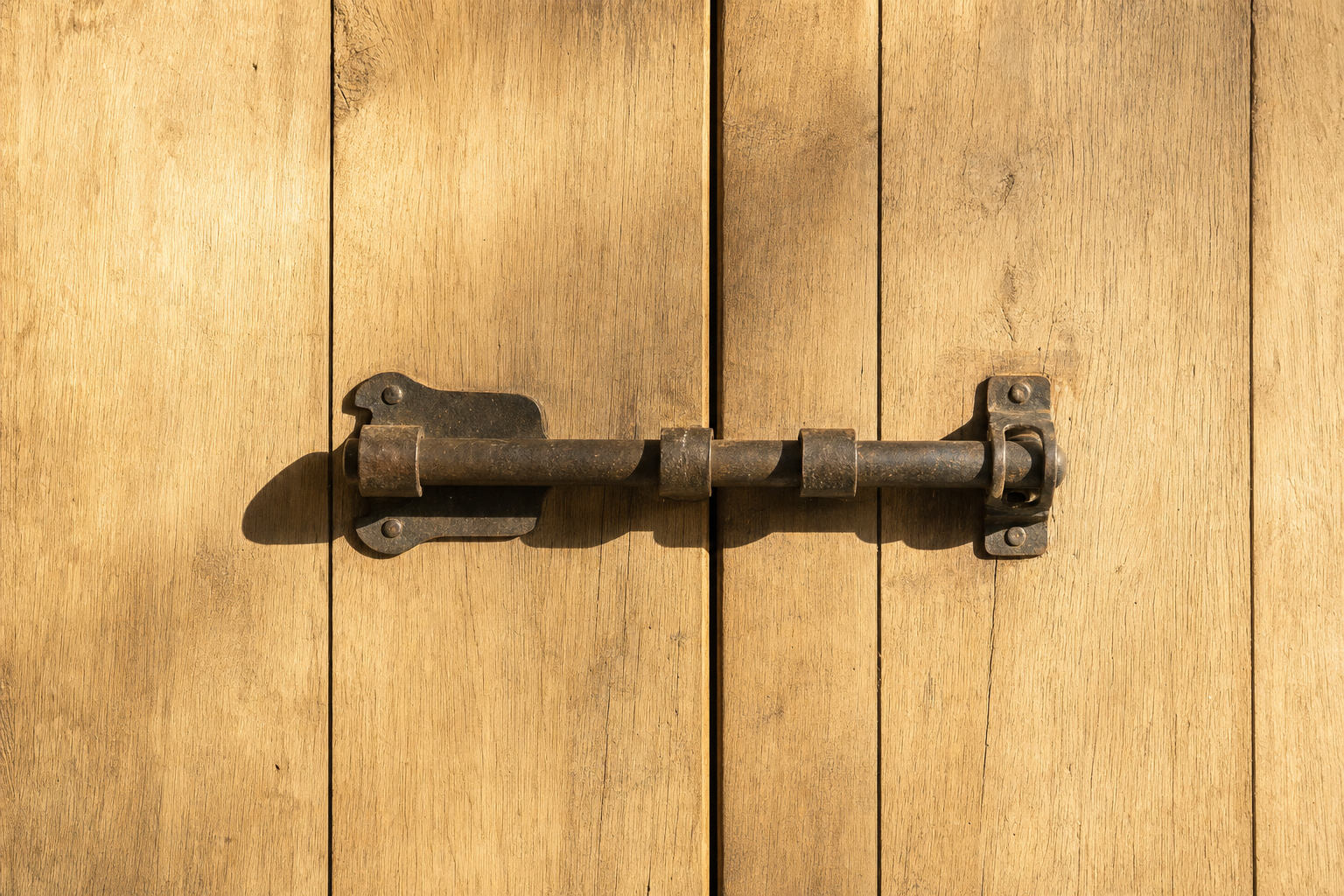
    A heavy iron bolt drawn shut across the inside of a plain wooden door, lit by low raking sunlight

    Ten amendments were ratified together on December 15, 1791, and every amendment in the Bill of Rights is written as a restraint rather than as a grant, with a government and not a citizen as the party bound. Direction is the whole point.

    Against Congress, in the first of the ten

    The First Amendment names the body it binds in its own first word. The clause reads “Congress shall make no law respecting an establishment of religion”. The subject of that prohibition is a legislature.

    Four of the ten name the party whose hands are tied: Congress in the First, a Soldier in the Third, a Court of the United States in the Seventh, and the United States in the Tenth, which reserves what was never delegated to it. The other six name no actor at all.

    Congress proposed twelve articles on September 25, 1789, and ten of them were ratified two years later. Articles three through twelve are the ten that survived. The amendment opening on the word Congress was proposed as Article the third.

    Advertisement

    Through a prosecution, at each stage the text names

    Four of the ten sit inside the criminal process. The Fourth reaches the search and the warrant. The Fifth reaches the charge, the compelled answer and the taking of property. The Sixth sets the terms of the trial, and the Eighth reaches bail, fines and punishment.

    Every one of those verbs implies a public actor behind it. Warrants issue, a person is held to answer, bail is required, and none of that can be done by anyone outside an office. The text names no officer, and does not need to.

    The Seventh is the civil counterpart, and it names its court outright. No fact tried by a jury, it says, “shall be otherwise re-examined in any Court of the United States”.

    Beyond the enumerated rights, in the last two

    The Ninth and the Tenth describe no right. The Ninth is an instruction about reading. The enumeration of certain rights, it says, “shall not be construed to deny or disparage others retained by the people”. The party restrained is whoever does the construing.

    The Tenth is an accounting of power. Powers not delegated to the United States, and not prohibited by it to the States, are reserved “to the States respectively, or to the people”. Neither clause is a promise made to a person. Both tell an official body what it may not assume it holds. How much the Tenth adds is contested. In 1941 the Court called it “but a truism that all is retained which has not been surrendered” (United States v. Darby, 312 U.S. 100, 124). Since 1992 the commandeering cases have read it as a limit Congress can run into. Congress, that line holds, “lacks the power directly to compel the States to require or prohibit” acts (New York v. United States, 505 U.S. 144, 166). Printz v. United States extended that to a State’s own officers. Both readings address the same party.

    The same test runs through all ten, and the National Archives transcript of the enrolled original is the printing every quotation below follows. The middle column below asks the same question of each of the ten: who is restrained.

    AmendmentWho or what it restrainsThe operative words, quoted
    FirstCongress, named in the opening word“Congress shall make no law respecting an establishment of religion, or prohibiting the free exercise thereof; or abridging the freedom of speech, or of the press; or the right of the people peaceably to assemble …”
    SecondNo actor is named; the clause is written in the passive“A well regulated Militia, being necessary to the security of a free State, the right of the people to keep and bear Arms, shall not be infringed.”
    ThirdA Soldier, in peace and in war; in peacetime the Owner’s consent is the condition“No Soldier shall, in time of peace be quartered in any house, without the consent of the Owner, nor in time of war, but in a manner to be prescribed by law.”
    FourthWhoever searches or seizes, and whoever issues a warrant; neither is named“no Warrants shall issue, but upon probable cause, supported by Oath or affirmation, and particularly describing the place to be searched, and the persons or things to be seized”
    FifthWhoever holds a person to answer, tries them twice, compels testimony, or takes property“No person shall be held to answer for a capital, or otherwise infamous crime, unless on a presentment or indictment of a Grand Jury”; “nor shall private property be taken for public use, without just compensation”
    SixthNo actor is named; the clause confers the rights on the accused and leaves the party bound unnamed“In all criminal prosecutions, the accused shall enjoy the right to a speedy and public trial, by an impartial jury of the State and district wherein the crime shall have been committed …”
    SeventhAny Court of the United States, named outright“no fact tried by a jury, shall be otherwise re-examined in any Court of the United States, than according to the rules of the common law”
    EighthWhoever requires bail, imposes a fine or inflicts a punishment; none is named“Excessive bail shall not be required, nor excessive fines imposed, nor cruel and unusual punishments inflicted.”
    NinthWhoever construes the Constitution“The enumeration in the Constitution, of certain rights, shall not be construed to deny or disparage others retained by the people.”
    TenthThe United States, which holds delegated powers only“The powers not delegated to the United States by the Constitution, nor prohibited by it to the States, are reserved to the States respectively, or to the people.”

    Under the Fourteenth Amendment, in the words No State shall

    On their own the ten run against the federal government and nothing else. The Supreme Court said so in 1833, in Barron’s takings claim against the Mayor and City Council of Baltimore. These amendments, it held, “contain no expression indicating an intention to apply them to the state governments”. The Court added that it “cannot so apply them”. The Fourteenth Amendment, ratified in 1868, supplied words the first ten never had. Its first section turns to the States in its second sentence: “No State shall make or enforce any law”. Whether a clause of the first ten binds a State is a question put under that later text.

    Advertisement

    Between private parties, the amendments are silent

    That structure answers a question people ask constantly. A private employer is not Congress. A neighbour is not a court. A company is not a State. None of the ten places a duty on any of them, because none of the ten is addressed to them, and the Fourteenth adds only “No State”. That is settled doctrine and not an inference. Of the Fourteenth Amendment the Supreme Court said in 1883 that “Individual invasion of individual rights is not the subject-matter of the amendment”. For the ten, Barron settles it.

    Protection against a private party comes from a different instrument. A statute, a contract, a condition of employment: each has its own text and its own reach. The phrase “protects you from” means from official action, and the narrowness is the doctrine’s own structure.

    One limit sits on all of it. Who a clause is addressed to is settled by its words. What counts as an unreasonable search, or an excessive fine, is not. Those words open that question rather than closing it.

    The short version

    Across all ten, the party under restraint is a public one

    Private people run all through the set, and never as the party restrained. The Third names an Owner, whose consent is what a soldier lacks. The Sixth names the accused, who holds the rights it lists. Where the ten name a party bound, they name a public one, and where they name none, the clause forbids the act and leaves the actor out. Ask of any of the ten who is being told to stop. The answer is a public actor every time.

    This is educational content explaining what each amendment says, not commentary on any pending legislation or litigation.

  • Firearm Terms the Law Uses: A Plain-Language Guide to the Categories

    Firearm Terms the Law Uses: A Plain-Language Guide to the Categories

    A wooden gavel lying across its round sound block on a dark slate surface

    Congress did not use the ordinary meanings of these words. It wrote definitions of its own, in 18 U.S.C. § 921 and 26 U.S.C. § 5845, with one registration provision at 26 U.S.C. § 5841.

    The statutory definition of a firearm reaches the frame or receiver by itself

    Start with the term the rest of federal gun law hangs on. The definition at 18 U.S.C. § 921(a)(3) has four parts. The first is “any weapon (including a starter gun) which will or is designed to or may readily be converted to expel a projectile by the action of an explosive”. The second is “the frame or receiver of any such weapon”. The third and fourth are “any firearm muffler or firearm silencer” and “any destructive device”.

    Subparagraph (B) is the part that surprises people. A frame or receiver is a firearm on its own, with nothing attached.

    Subparagraph (C) reaches a component most people call by another name. The statute’s words are “firearm silencer” and “firearm muffler”. Section 921(a)(25) defines both as a device “for silencing, muffling, or diminishing the report of a portable firearm”. The same paragraph reaches “any combination of parts” intended for assembling one, and “any part intended only for use in such assembly or fabrication”. Everyday speech has settled on a third word.

    Ordinary speech sorts guns into categories the statute never names. That gap is worked through in a separate piece on “assault rifle” and AR-15, and this piece leaves the pair there.

    Advertisement

    Under title 18, any gun made in or before 1898 falls outside the definition

    The definition closes with one short sentence: “Such term does not include an antique firearm”. The definition it points at is § 921(a)(16).

    Subparagraph (A) covers any firearm “manufactured in or before 1898”. It names matchlock, flintlock and percussion cap ignition among others. Subparagraph (B) covers replicas of those, on conditions about the ammunition a replica takes. Subparagraph (C) covers muzzle loading rifles, shotguns and pistols designed to use black powder or a black powder substitute. Those must also be unable to use fixed ammunition.

    Subparagraph (C) then carves things back out of itself. It excludes any weapon incorporating a firearm frame or receiver. It excludes a firearm converted into a muzzle loading weapon.

    One term, two titles, two texts. Title 26 defines “antique firearm” again, and more narrowly, at 26 U.S.C. § 5845(g). There the date of manufacture is not enough on its own. A gun designed for conventional centerfire fixed ammunition still counts, unless that ammunition is no longer made and is not readily available. A citation to one is not a citation to the other.

    The design test does the work for rifle, shotgun and handgun

    Three definitions share a formula. A rifle, under § 921(a)(7), is “designed or redesigned, made or remade, and intended to be fired from the shoulder”. It is made “to fire only a single projectile through a rifled bore for each single pull of the trigger”. A shotgun, under § 921(a)(5), repeats the shoulder language. The definition substitutes “a smooth bore” and “either a number of ball shot or a single projectile”.

    The formula asks what the object was designed, made and intended to be. It does not ask what the object looks like.

    A handgun sits on a different axis. Under § 921(a)(30) a handgun “has a short stock and is designed to be held and fired by the use of a single hand”. Subparagraph (B) adds “any combination of parts” from which such a firearm can be assembled. Check that paragraph number before you cite it. Section 921(a)(29) defines a different term, “semiautomatic rifle”.

    The short-barreled categories are settled with a tape measure

    Most legal tests ask for judgement. These two ask for a ruler. A short-barreled rifle, under § 921(a)(8), has “one or more barrels less than sixteen inches in length”. The same paragraph reaches a weapon made from a rifle whose overall length falls under twenty-six inches. A short-barreled shotgun, under § 921(a)(6), uses eighteen inches for the barrel and the same twenty-six overall.

    Paragraphs (1) through (4) of 26 U.S.C. § 5845(a) set the same thresholds on the tax side. The measurement itself asks for no judgement, though the object has to be a rifle or a shotgun first, and those two definitions are the design-and-intent tests above. A threshold written as a number does not drift, and that is the reason for writing it that way.

    Advertisement

    The National Firearms Act uses the word firearm to mean eight specific things

    Section 5845 opens “For the purpose of this chapter—” and then redefines a familiar word. Under § 5845(a) a firearm is one of eight things. Four are the short-barreled categories above. The other four are “any other weapon” as defined in subsection (e), a machinegun, a destructive device, and “any silencer (as defined in section 921 of title 18, United States Code)”. The subsection then excludes antique firearms, and devices other than machineguns and destructive devices that the Secretary finds are primarily collector’s items.

    The tax statute writes no silencer definition of its own. It borrows the one in title 18. Amend § 921(a)(25) and § 5845(a)(7) moves with it.

    Membership in that list is what attaches consequences. The registry provision, 26 U.S.C. § 5841(a), directs a “central registry of all firearms in the United States”. Firearms the United States possesses or controls are excluded. The word firearms there carries the § 5845(a) meaning, not the ordinary one. Under § 5841(b), manufacturers, importers and makers register what they make or import. A transferred firearm is registered to the transferee by the transferor.

    Set the terms side by side. Some turn on design and intent. One lays a measurement on top of a design test. One turns on nothing but membership in a list.

    TermStatutory citationWhat the definition turns on
    Firearm18 U.S.C. § 921(a)(3)Expelling a projectile by the action of an explosive; also the frame or receiver, a muffler or silencer, and a destructive device
    Antique firearm18 U.S.C. § 921(a)(16)Manufacture in or before 1898; for replicas, the ammunition; for muzzle loaders, black powder and no fixed ammunition
    Shotgun18 U.S.C. § 921(a)(5)Designed, made and intended to be fired from the shoulder; a smooth bore
    Rifle18 U.S.C. § 921(a)(7)Designed, made and intended to be fired from the shoulder; a rifled bore; a single projectile
    Handgun18 U.S.C. § 921(a)(30)A short stock, and design to be held and fired by the use of a single hand
    Short-barreled shotgun18 U.S.C. § 921(a)(6); 26 U.S.C. § 5845(a)(1)-(2)Barrels under 18 inches; or, for a weapon made from a shotgun, overall length under 26 inches
    Short-barreled rifle18 U.S.C. § 921(a)(8); 26 U.S.C. § 5845(a)(3)-(4)Barrels under 16 inches; or, for a weapon made from a rifle, overall length under 26 inches
    Firearm silencer, firearm muffler18 U.S.C. § 921(a)(25)Being a device for silencing, muffling or diminishing the report of a portable firearm
    Firearm, in the NFA sense26 U.S.C. § 5845(a)Membership in an eight-item list, with antiques and collector’s items excluded

    The short version

    A federal definition decides federal questions and stops there

    Each term above is defined for a stated purpose, and § 5845 says so outright: “for the purpose of this chapter”. States define several of the same words in their own codes, so a federal meaning is not a meaning everywhere. Paragraph numbers move as Congress amends: “firearm silencer” sits at § 921(a)(25) today. Repealed paragraphs leave gaps behind, which is why § 921(a)(31) is printed as repealed by Pub. L. 103-322. Open the section and read it before relying on a citation to it.

    This is educational content explaining statutory terminology, not commentary on any pending legislation or litigation.

  • Four Congresses, One Code: What 1934, 1968, 1986 and 1993 Each Added to Federal Firearms Law

    Four Congresses, One Code: What 1934, 1968, 1986 and 1993 Each Added to Federal Firearms Law

    Four plain red wax seals of different sizes pressed in a loose block at the centre of a blank sheet of deckle-edged cream paper, on dark slate

    1934 brought the National Firearms Act. 1968 brought the Gun Control Act. 1986 brought the Firearms Owners’ Protection Act. 1993 brought the Brady Handgun Violence Prevention Act. Four Congresses passed them, the 73rd, the 90th, the 99th and the 103rd.

    Taxed a defined list and told its owners to register, 1934

    The Act is Public No. 474 of the 73rd Congress, approved June 26, 1934. Its text is printed at 48 Stat. 1236. Its long title reads “To provide for the taxation of manufacturers, importers, and dealers in certain firearms and machine guns, to tax the sale or other disposal of such weapons, and to restrict importation and regulate interstate transportation thereof”.

    Section 2 made importers, manufacturers and dealers register and pay a special tax. Section 3 laid a transfer tax of $200 on each covered firearm. Section 5 gave anyone already holding one sixty days to register it. The chapter was carried into the Internal Revenue Code, revised in 1968, and sits today at chapter 53 of title 26.

    Advertisement

    Wrote a new chapter into title 18 and left 1934 alone, June 1968

    1968 is two statutes, and the first is not the famous one. The Omnibus Crime Control and Safe Streets Act of 1968 was approved on June 19, at 82 Stat. 197. Its title IV is headed State Firearms Control Assistance. Section 902 opened the chapter. It reads “Title 18, United States Code, is amended by inserting after section 917 thereof the following new chapter”. That chapter was chapter 44, Firearms, opening at section 921.

    Section 906 repealed the Federal Firearms Act, the licensing statute of June 30, 1938 at 52 Stat. 1250. Section 904 pointed the other way. Nothing in the title, it said, “shall be construed as modifying or affecting any provision of” the National Firearms Act, chapter 53 of the Internal Revenue Code of 1954. The 1934 law stayed exactly where it stood.

    Rewrote both chapters four months later, October 1968

    The Gun Control Act of 1968 is Public Law 90-618, approved on October 22, 1968 at 82 Stat. 1213. Its long title begins “To amend title 18, United States Code”. Amend, not create. Chapter 44 was four months old, and not yet in force, when this Act reached it. Section 201, in title II, revised chapter 53 of title 26. That revision is the National Firearms Act text a reader opens today.

    Closed a category and borrowed 1934’s definition of it, 1986

    Public Law 99-308 was approved on May 19, 1986, at 100 Stat. 449. Its own section 1(a) names it the Firearms Owners’ Protection Act. The s on Firearms is the statute’s own. More legislation was needed, its findings say, “to reaffirm the intent of the Congress, as expressed in section 101 of the Gun Control Act of 1968”.

    Section 101 then added a definition that defines nothing. It reads “The term ‘machinegun’ has the meaning given such term in section 5845(b) of the National Firearms Act (26 U.S.C. 5845(b))”. A 1986 Congress sent the reader to a chapter a 1934 Congress opened. That paragraph sits at 18 U.S.C. 921(a)(24) today.

    Section 102(9) added a subsection at the end of 18 U.S.C. 922. It reads “Except as provided in paragraph (2), it shall be unlawful for any person to transfer or possess a machinegun”. Paragraph (2) carries two exceptions, and the second turns on the date the subsection took effect. Section 110 delayed the Act’s amendments by 180 days. Subsection (c) put section 102(9) into effect on the date of enactment, May 19, 1986.

    Advertisement

    Built an expiration date into the text, 1993

    Public Law 103-159 was approved on November 30, 1993, at 107 Stat. 1536. Only its title I is the Brady Handgun Violence Prevention Act. Title III of the same public law is the Federal Firearms License Reform Act of 1993. Title I added two subsections to section 922. Section 102(a) is headed Interim Provision. Section 102(b) is headed Permanent Provision.

    The interim one dated itself. Section 922(s)(1) applied beginning 90 days after enactment and ending “on the day before the date that is 60 months after such date of enactment”. Counting from November 30, 1993, that is February 28, 1994 through November 29, 1998. It is still printed in the Code, and by its own terms it reaches nothing.

    The permanent one waited on a system rather than a date. Section 922(t)(1) starts thirty days after the Attorney General notifies licensees “that the national instant criminal background check system is established”. Section 103 of the same title ordered that system built within sixty months of enactment, and that section sits today at 34 U.S.C. 40901.

    Definitions do a lot of the work in all four. Section 1 of the 1934 Act opens on definitions, and section 921 does that job for the 1968 chapter. How one familiar name lines up against these statutory definitions is its own subject. Each of these Congresses legislated for the federal code alone, and every state kept its own.

    The short version

    Two chapters of the Code have carried all four since 1993

    The four ended up in two chapters, 53 of title 26 and 44 of title 18. Neither has since lost one. The 1968 Congress repealed a 1938 statute, wrote a savings clause for the 1934 one in June, and revised its chapter in October. The 1986 Congress reached into both chapters rather than opening a third. The 1993 Congress set an end date on one of the two subsections title I added. That is the only thing in the stack that ever stopped, and it stopped because the statute said when.

    This is educational content explaining the legislative record, not commentary on any pending legislation or litigation.

  • Index Funds, Explained: What You’re Buying and What It Costs

    Index Funds, Explained: What You’re Buying and What It Costs

    A stoneware bowl packed with dozens of small stone blocks around a globe-marked sphere, a hand adding one more block

    The index your fund tracks is a document, and the document has an owner. In 2025, S&P Global’s Indices segment collected $1,206 million in asset-linked fees from the funds tracking its rules. Your expense ratio carries that licence, and it is the only figure in this arrangement disclosed before you invest.

    Paying rent on a list you did not write

    An index is not a market. It is a rulebook: which securities qualify, how each one is weighted, when the list gets rebuilt. A company writes that rulebook, publishes it, and licenses it to fund sponsors.

    The scale of that business is disclosed. Indices segment revenue for 2025 was $1,850 million, per the S&P Global 10-K filed in February 2026. Asset-linked fees supplied $1,206 million of it, or about 65%. That line scales with balances rather than with effort.

    So the first thing an index fund buys on your behalf is compliance with somebody else’s document. No portfolio manager picks the holdings. A rule does, and the rule is a commercial product with a price on it.

    Advertisement

    Copying a list without buying every name on it

    Tracking sounds mechanical. Two funds run by the same firm show what it actually involves.

    Fidelity Total Market Index Fund follows the Dow Jones U.S. Total Stock Market Index. Its summary prospectus says the fund uses “statistical sampling techniques” to “attempt to replicate the returns” of that index. Total annual operating expenses run 0.015%. Attempt is the operative word.

    Sampling means the fund holds a subset chosen to behave like the whole. A subset will not behave identically. The gap between what the fund returned and what the index returned is tracking difference. It is measured over a real period, after the fact.

    Tracking error is a separate statistic. It measures how much that gap wobbles from period to period, not how large it was. A fund can lag its index steadily. That is low tracking error and a negative tracking difference at once.

    Fees, trading costs and the sampling method all push on tracking difference. Only one of the three is printed on the front page of the prospectus.

    Handing 0.64% to a fund for thirty years

    Now the arithmetic, and the growth rate has to be declared. The rate used here is the 10-year Treasury constant maturity yield, 4.77% on September 3, 2026. It comes from the Federal Reserve’s H.15 release of the following day. That figure is a labelled risk-free rate, and nothing here forecasts what stocks return.

    The wider spread is where the money is. The Investment Company Institute, an industry association, published 2025 asset-weighted averages in March 2026. Index equity mutual funds averaged 0.05%; actively managed equity mutual funds averaged 0.64%. The distance between those two is the whole argument.

    Start with $100,000, which is illustrative. Subtract each fee level from that growth rate and compound for thirty years.

    Annual feeWhose figure it isBalance after 30 years
    0.00%Fidelity ZERO Total Market Index Fund$404,677
    0.015%Fidelity Total Market Index Fund$402,942
    0.05%Index equity mutual funds, asset-weighted average$398,923
    0.64%Actively managed equity mutual funds, asset-weighted average$336,726

    Growth rate: 10-year Treasury constant maturity yield of 4.77%, observation of September 3, 2026, Federal Reserve H.15 released September 4, 2026 – a risk-free rate, not a market expectation. Fund expense ratios from the SEC-filed summary prospectuses dated December 30, 2025 and April 29, 2026. The 0.05% and 0.64% averages are 2025 asset-weighted figures from the Investment Company Institute, an industry association, in ‘Trends in the Expenses and Fees of Funds, 2025,’ published March 2026. The $100,000 starting balance is illustrative.

    The zero-fee row reaches $404,677. The 0.64% row reaches $336,726, or $67,951 less. That is 16.8% of the ending balance, accounted for by a difference of sixty-four basis points a year.

    Here is the part that keeps the exercise honest. The ending balances are entirely a function of the growth rate. Change 4.77% and every dollar figure in the table moves with it. The 16.8% barely moves at all.

    Run the identical table at 2% and the share is 17.2%. At 8% it is 16.3%. Neither of those rates is a forecast; they are arbitrary stress values, chosen only to show that the share does not depend on the growth rate. The ratio between two fee levels is the finding. The balance is scaffolding.

    Advertisement

    Owning the rulebook is what lets a fee reach 0.00%

    Fidelity ZERO Total Market Index Fund reports total annual operating expenses of 0.00%. It does not follow a Dow Jones index. It follows the Fidelity U.S. Total Investable Market Index, built in-house on what the prospectus calls “a rules-based proprietary index methodology.”

    Write the rulebook yourself and there is no licence to pay. That is not the sole reason a fee lands at zero. It does delete one line from the cost stack, the same line S&P Global books as revenue.

    Each fund above appears as a documented fee level. Inside an index fund, as the first section set out, a published rule has already settled the holdings question.

    That leaves the wrapper. A fund is what you hold. An account is where you hold it. That second choice runs on tax rules, and the traditional-versus-Roth decision turns on something else entirely.

    The short version

    The fee is the only number here that is known in advance

    Returns are unknown. Tracking difference is unknown until a period ends and someone measures it. The expense ratio is printed in the summary prospectus before a dollar moves. The illustrative $100,000 starting balance ends $67,951 higher at 0.00% than at 0.64%.

    The thirty-year figures compound an illustrative $100,000 at a labelled risk-free rate and vary only the expense ratio, so they isolate fee drag and forecast no return; the funds named appear as documented fee levels and none of them is a recommendation to buy, the ratios are quoted from prospectuses on the dates given and can be revised, an index fund carries the full market risk of the index it follows, tracking difference means a fund’s result will not equal that index’s, and in a taxable account distributions and index turnover both change what a holder keeps.

  • S&P 500 Concentration Risk: What Diversified Really Means Now

    S&P 500 Concentration Risk: What Diversified Really Means Now

    A wooden balance holding six large dark cubes on one side and a block of twenty-five small pale cubes on the other

    Ask most people what it means to own an S&P 500 index fund. They’ll describe something close to a settled bet: five hundred companies, spread across every major industry, no single name doing much on its own. That description is getting harder to defend. S&P 500 concentration risk is now at its highest level on record. A small group of AI-linked mega-caps is driving almost all of it. If you own a broad index fund and call yourself diversified, it’s worth understanding what that word means today.

    What Concentration Means, Mechanically

    The S&P 500 is not weighted by company count. It’s weighted by market value. Bigger companies get a bigger slice of the index. Every dollar you put into a fund tracking it follows that same split, automatically.

    That has a quiet consequence. When a handful of companies grow much faster than the other 490-plus, they don’t just get bigger inside the index. They pull more of your money along with them, whether you chose that exposure or not. A fund can keep its name, its ticker, and its reputation for diversification. Its actual makeup can shift underneath you anyway.

    Advertisement

    How Big Is the S&P 500 Concentration Risk Right Now

    As of May 2026, the ten largest companies in the S&P 500 made up roughly 40% of the index’s total weight, according to asset manager VanEck. A decade earlier, in 2016, those same ten spots held about 18%. The wealth-management firm RBC Wealth Management puts the more recent figure at roughly 41%, as of the end of 2025. That’s the highest concentration level RBC has on record for the index.

    Some rough milestones, drawn from RBC’s data, help place that number. Around 1990, the top ten held about 19% of the index. At the peak of the dot-com bubble in 2000, concentration climbed to roughly 23% by year end. By 2015, concentration had drifted back down to about 19% of both weight and earnings. From there it has more than doubled in a single decade. RBC describes that rise as a surge to historic levels.

    Is This Just a Repeat of the Dot-Com Bubble?

    It’s tempting to draw a straight line from today’s AI-driven concentration to 2000. The comparison isn’t baseless. Today’s top-ten weight sits well above that era’s peak. But the parallel has real limits. The dot-com leaders were often pre-revenue companies trading on narrative alone. Today’s largest holdings are, by and large, deeply profitable businesses with substantial cash flow. That’s a genuinely different starting point. Reasonable analysts disagree on how much comfort that difference should offer. Neither view is settled.

    One point isn’t really in dispute, though. It’s the mechanical one that FINRA, the securities industry’s self-regulator, makes about concentration risk in general. FINRA defines it as the risk of amplified losses from holding a large portion of your money in one investment, asset class or market segment. The same arithmetic amplifies gains. That holds whether the companies involved are speculative or genuinely excellent.

    Advertisement

    Questions Worth Asking Your Portfolio

    None of this points toward a specific action. It points toward a few questions worth sitting with. What share of a portfolio, across every account, sits in its ten largest underlying holdings? When an “international” fund and an S&P 500 fund lean on the same handful of companies, how much diversification does holding both add? The SEC’s own investor guidance makes this same point. A fund’s name doesn’t guarantee diversification, and a fund’s top holdings are published in its own documents.

    These questions don’t have one correct answer. Someone with decades until retirement may reasonably shrug at this concentration. Someone closer to drawing on their portfolio may weigh it differently. What a fund holds today can differ from what its name or its reputation implies.

    The short version

    Concentrated stretches have happened before, and each one ended in a different shape

    Markets have gone through concentrated stretches before. They’ve come out the other side in different shapes each time. That history doesn’t tell you what happens next. It shouldn’t be read as reassurance, and it shouldn’t be read as a warning either. It’s simply useful context. It helps you understand where your money sits right now, inside a fund whose label hasn’t changed even though its contents have.

    The concentration figures are index weights as of the dates their sources give, and they move as the index does; how much of any one portfolio sits in those same companies depends on the funds it holds, and no stock or fund is named here to buy, sell or hold.

  • Reading a Coffee Bag Label: Which Lines Federal Law Requires, and Which Ones the Roaster Chose

    Reading a Coffee Bag Label: Which Lines Federal Law Requires, and Which Ones the Roaster Chose

    Seen over a person's shoulder, two hands holding an unbranded kraft coffee bag open to its information panel, which lists tasting notes, origin, region, process, varietal, a roast-level scale, roast date and net weight, with a mug and a gooseneck kettle out of focus behind

    Every line on a bag of coffee is either required by federal law or chosen by the roaster. On a plain bag three are required – what it is, how much is in the bag, and who is answerable for it. Country of origin looks like a fourth and, on coffee roasted in America, usually is not.

    “Net wt. 12 oz,” and the two lines that keep it company

    A retail bag of plain roasted coffee carries three mandatory declarations, and two of them are about the package rather than the coffee. The net quantity of contents goes on the principal display panel, inside the bottom 30 percent of it. The name and place of business of the manufacturer, packer or distributor is required too, down to the ZIP code. If the firm named did not roast the coffee, 21 CFR 101.5(c) requires the name to be qualified. The qualifier must express the facts – “Distributed by”, or similar wording. Add a second ingredient – a flavouring, chicory – and 21 U.S.C. 343(i)(2) and 21 CFR 101.4(a)(1) add a fourth line, an ingredient statement.

    Advertisement

    The third is the statement of identity, the only required line that touches what is inside. Where a food is sold in optional forms, 21 CFR 101.3(c) makes the form part of that statement. The exception is a form visible through the container, or shown in a vignette. That is why an opaque bag says whole bean or ground. It is also where the requirement stops: how coarse is a question the label never answers.

    One absence is deliberate. Coffee beans, whole or ground, are exempt from nutrition labelling under 21 CFR 101.9(j)(4), which names them outright. The exemption holds only while the food bears no nutrition claim and no other nutrition information – on the label, in labelling or in advertising. Make one anywhere and the panel comes back.

    “Product of Colombia,” a mark that attaches at the border, not on the shelf

    Country of origin marking is a customs duty, not a food-labelling one. Except as the statute itself provides otherwise, 19 U.S.C. 1304(a) requires every article of foreign origin to be marked with the English name of its country of origin. The marking has to indicate that origin to an ultimate purchaser in the United States. The question is who that purchaser is. A U.S. firm that converts the import into an article of different name, character or use becomes the ultimate purchaser under 19 CFR 134.35(a). The article is then excepted from marking.

    Customs and Border Protection has held for more than 30 years that roasting green coffee produces an article of different name, character and use. That position rests on rulings from 1983 and 1984 which found roasting sufficient to change coffee’s character and use. Its 2017 final determination, HQ H291135 at 82 FR 55387, was issued for government procurement rather than marking. So the country name on an American-roasted bag is usually the roaster’s line.

    “Roasted on,” a date line no federal rule asks for

    This is the most useful line on the bag and the least governed. The FDA is flat about it: “Except for infant formula, manufacturers are not required by Federal law or regulation to place quality-based date labels on packaged food”. No roast date, no best-by, no sell-by. The agency supports “Best if Used By” as an industry standard phrase, and supporting is not requiring.

    “USDA Organic,” the optional line that brings a rulebook with it

    Organic is where the argument turns. Nothing requires a roaster to say a word about organic production. Say it, and 7 CFR 205.300(a) applies. The term may only be used on products produced and handled under that part. The thresholds run by weight, excluding water and salt. “Organic” takes at least 95 percent organic ingredients, “made with organic” at least 70, and “100 percent organic” means exactly what it says. Certification under 7 CFR 205.100(a) is mandatory, and the label must name the certifying agent. An operation with $5,000 or less in annual gross organic sales is exempt from certification. 7 CFR 205.310(a) then bars it from the USDA seal.

    Every other seal on the bag works differently. A certifier’s mark is defined by the private organisation that wrote the standard behind it, and what those standards buy is a separate argument this site makes elsewhere.

    “Single origin, washed, Gesha, high grown,” four claims no federal rule defines

    These are the lines people buy on, and no federal rule defines any of them. That is a negative, so here is what was checked. FDA’s standards of identity sit in 21 CFR parts 130 through 169, and none of them is coffee. Part 102, the common-or-usual-name part for foods with no standard, runs to eighteen sections and none is coffee either. A full-text search of the Code of Federal Regulations returns no definition of “single origin”, “specialty coffee”, “Gesha” or “high grown”. What does apply is 21 U.S.C. 343(a)(1), which deems a food misbranded if its labelling is false or misleading in any particular. No definition is not the same as no law. It means there is no yardstick.

    The line as it appears on a bagWho defines itThe defining text, rule number or standard
    “Coffee — whole bean” or “ground”federal rule21 CFR 101.3(a) and (c); the form is part of the statement of identity, except where it is visible through the container or shown in a vignette
    “Net wt. 12 oz”federal rule21 CFR 101.7(a), on the principal display panel
    “Distributed by [firm], city, State, ZIP”federal rule21 CFR 101.5(a), (c) and (d)
    “Product of Guatemala” on coffee imported already roastedfederal rule19 U.S.C. 1304(a); 19 CFR 134.11; 19 CFR 134.1(d)(3), which makes the retail buyer the ultimate purchaser of an article sold at retail in its imported form
    “USDA Organic” or “Organic”federal rule7 CFR 205.300(a), 205.301(b), 205.303(b)(2); certification under 205.100(a)
    No Nutrition Facts panelfederal rule21 CFR 101.9(j)(4); the exemption lapses if the food bears a nutrition claim on the label, in labelling or in advertising
    Any other certifier’s sealcertifier standardthat private organisation’s own published standard
    “Roasted on” or “Best if Used By”nobodyFDA: not required by Federal law or regulation, except for infant formula
    “Washed” or “natural” as a processing method, a variety name, an altitudenobodyno standard of identity in 21 CFR parts 130–169; no entry in 21 CFR part 102; FDA has made no rule defining “natural”
    “Single origin”, “small batch”, “specialty”nobodyno CFR definition found; 21 U.S.C. 343(a)(1) still bars a misleading label

    This maps federal requirements for a retail bag of roasted coffee, and it stops there. State labelling law, FTC advertising rules and coffee sold in bulk sit outside it. None of it says whether the coffee is good.

    Advertisement — advertiser disclosure

    “Net wt. 12 oz,” a line the government stands behind, and “single origin,” a line only the roaster does

    Three lines are required on every plain bag. Coffee imported already roasted must also carry its country of origin. One seal answers to a private standard. The organic rules apply only because a roaster chose to print the word. Every other line is backed by the firm whose name and ZIP code the law already made it print. That address answers who can be asked. A roaster who prints a roast date beside an altitude is volunteering to be held to both.

  • Burr vs. Blade Grinders: What ‘Uniform’ Means in the Cup

    Burr vs. Blade Grinders: What ‘Uniform’ Means in the Cup

    A tall black electric burr grinder with a bean hopper and grind dial beside a short stainless blade grinder with a clear lid, both on a wooden counter

    A grinder’s uniformity is a measured width. It is how tightly the ground mass gathers around one particle size, and how much of it scatters into dust below that size and fragments above it. Particle size then sets how fast water empties each grain. In an extraction model of a brew that ends within minutes, the smallest grains come out close to spent while the largest are still giving up their centres.

    Particle sizes are set by an aperture in one grinder and by the clock in the other

    The burr grinder in a 2016 Scientific Reports study by Uman and colleagues fractures beans between two burrs, one stationary and one mobile. The team held the aperture between them constant for every coffee they measured, while bean origin and bean temperature varied. A blade grinder has one size control. It is the length of time the machine runs. Murray and Laredo, writing in the Journal of Food Research in 2015, describe beans cut “by means of a high speed turning blade”. That gives a distribution “usually broad and subject to variability based on somewhat arbitrary grinding time.”

    Advertisement

    Murray and Laredo then measured that spread in a household blade grinder. They ground 37-gram samples of whole beans for between 1.5 and 84 seconds. Each sample went through a stack of eight sieves, with openings from 9.5 millimetres down to 75 microns. Every fraction was then weighed. As grinding time grew, the distribution became “more narrow and asymmetric”. After 84 seconds most of the weighed sample sat between 75 and 300 microns, with 4% below 75 microns. That sieve record puts measured sizes on the chunks-and-dust picture of a blade grind. The spread was widest at the shortest grinding times, which leave the coarsest grinds, and narrowed as grinding drove the whole dose toward fine sizes.

    Uman’s group measured the burr side by laser diffraction. They ground coffees from four origins on a set of Turkish burrs, and found the surface-area profile “distinctly bimodal.” Two modes sit in that profile. They are near 27 microns for the fines, and near 257 to 282 microns for particles roughly ten times wider. By particle number, a tally the numerous fines dominate, 99% of that burr grind measured 70 microns across or less, and the fines carried “the majority of the accessible surface area.” Grinding the beans colder gave a narrower distribution and a smaller mean size. The two records come from different laboratories. They used different beans, and they tally particles differently: the laser profiles by number or by surface area, the sieves by weighed mass.

    A grain’s surface is emptied in seconds and a coarse grain’s core over minutes

    Water reaches the solubles in a coffee grain by two routes. A 2016 extraction model by Moroney and colleagues in the Journal of Mathematics in Industry names both. Extraction from a single grain, in their words, is controlled by two processes, “a rapid dissolution of coffee from the grain surfaces in conjunction with a much slower diffusion of coffee through the tortuous intragranular pore network to the grain surfaces.” The grains are treated as a dilute, well-mixed suspension, with parameters from the group’s experimentally validated 2015 paper. The model then gives each route a timescale.

    For a fine drip-filter grind the surface timescale is about 1.2 seconds and the diffusion timescale about 42 seconds. For a relatively coarse grind they are about 19 and 270 seconds. The coarse grind’s diffusion clock therefore runs about 6.4 times as long, and its surface clock about 16 times as long. In the model’s definitions each timescale grows with a Sauter mean diameter, the size of a sphere sharing the grains’ ratio of volume to surface, so a larger grain runs slower on both routes.

    In a wide distribution those clocks run side by side within a single brew. Uman’s group states the consequence plainly: “variable accessible surface area causes the small particles to extract more rapidly relative to larger ones.” Given long enough, the slow clock finishes too. Liang, Chan and Ristenpart, writing in Scientific Reports in 2021, ground coffee across a more than twofold range of median particle size, measured by laser diffraction. Each full-immersion brew stood until its dissolved solids held steady. That took 20 minutes at 99°C and 60 minutes at 80°C.

    At that equilibrium the extraction yield averaged 20.70 ± 1.08% at brew ratios of 3 and above, and “variation in brew temperature or grind sizes did not considerably alter” it. The same paper describes flow brewing as the case where “the flow rate, brew ratio, and total brew time can be varied.” Taking the well-mixed model’s clock as a guide to a percolation bed, a brew that drains in four and a half minutes has run for about one diffusion timescale of the coarser grind. Its coarse grains are then still giving up solubles from their cores when the water leaves.

    Flavour has been measured on brewed coffee, both as whole-cup averages and as time-sliced fractions. At the UC Davis Coffee Center, 12 panelists scored drip brews of one washed coffee from Honduras. Sourness rose with total dissolved solids, a measure of strength. It fell as percent extraction rose. Bitterness, charted for a medium roast, rose with both. Those findings come from the researchers’ own summary of their 2020 Journal of Food Science paper, published by the Specialty Coffee Association, an industry association. A trained panel from the same group also tasted drip brews collected in 30-second fractions. The earlier fractions, which carry more dissolved solids, were “systematically more bitter and more sour” than the later ones.

    Advertisement — advertiser disclosure

    A broad distribution is brewed as several extractions at once

    In a brew stopped short of equilibrium, the extraction kinetics put a broad grind’s fines further along than its largest fragments, inside one cup. A matched-yield tasting of a blade grind against a burr grind is the experiment that would score what that split does to flavour. The UC Davis whole-cup results for that one coffee had sourness falling as extraction rose. In a medium roast, bitterness rose as extraction rose. Mapped onto those results, the split points to bitterness from the fines and sourness from the largest fragments, at an average yield between them.

  • Five Variables, One Cup: Grind, Water, Ratio, Temperature and Time

    Five Variables, One Cup: Grind, Water, Ratio, Temperature and Time

    A cup of black coffee on a wooden table surrounded by the things that change it — a bowl of grounds, a glass of water, a bowl of beans on a scale, a gooseneck kettle, a dial thermometer and an hourglass

    A bad cup is not a mystery. It is one variable sitting outside its range. The fault in the cup points at the culprit — if you changed only one thing.

    Ratio and water get set once and then left alone

    Brew ratio is the ballast. SCA Standard 310-2021 tests home brewers at 55 g of coffee per 1.000 kg of water. The standard is the SCA’s own. That copy is a public verbatim mirror; the association’s own public link to it returns a 404. Fifty-five grams per litre is a defensible place to stand. Pick it, weigh it, and stop moving it while you hunt the fault.

    Advertisement

    Ratio is the strength control. Turn it and more coffee dissolves into the same water. It does not change how hard the water worked on any single particle. That is a separate fault line from extraction. Confusing the two is the most common reason a fix does not hold.

    Water is the other one you settle and then leave alone. It is not a dial you turn between cups. It still moves the cup further than a gram of coffee does. The full account sits in why your coffee tastes different at home than at the café. Sort it once, then treat it as fixed and stop blaming it.

    What the drip standard pins down, and what it declines to

    Published targetFigureSCA documentYear
    Brew ratio for testing55 g coffee per 1.000 kg waterStandard 310-2021, Home Coffee Brewers2021
    Brew strength (TDS)1.15–1.55% at the standard ratioStandard 310-2021, Home Coffee Brewers2021
    Slurry temperature90–96°C by the moment 33% of the water has been sprayedStandard 310-2021, Home Coffee Brewers2021
    Extraction (solubles yield)18.0–22.0%Minimum Certification Requirements for Coffee Brewers2017
    Water contact timemore than 4 minutes, less than 8 minutesMinimum Certification Requirements for Coffee Brewers2017
    Water temperature at the grounds92°C within the first minute, never above 96°CMinimum Certification Requirements for Coffee Brewers2017
    Source: Specialty Coffee Association, Standard 310-2021 (read from a public verbatim mirror at coffeegeek.com) and the SCA’s 2017 Minimum Certification Requirements for Coffee Brewers. Both fetched 8 September 2026. Figures are published targets for drip brewers, not measurements of any particular cup.

    Read the year column, not just the numbers. The 2021 standard defines percent extraction and then sets no numeric target for it, and no brew-time requirement at all. The 18.0–22.0% window everybody quotes comes from the older 2017 certification requirements, and so does the 4-to-8-minute contact time.

    The two documents also disagree with each other. The 2017 requirements put the floor at 92°C, measured in the water at the point it meets the grounds. The 2021 standard asks for 90 to 96°C measured in the slurry itself, on three thermocouples in the bed. The floor reads two degrees lower, but the thermometer also moved, which is the point: these are committee specifications with a publication date and a test rig behind them, not physical constants.

    Read the table as a specification for machines, not as a recipe. A brewer can hit every row and still produce a cup you dislike. The rows are useful as a sanity check on your kit. They are also a reminder that accepted numbers carry a publication date.

    Grind is the fastest lever on the panel

    Grind size sets how much coffee surface the water can reach. That is why it moves extraction further per notch than anything else here. It is also the entire claim this piece needs from it. Grind size isn’t a setting makes the rest of the case, grinder included.

    For diagnosis, treat grind as the first thing you move, and the only thing you move that brew. The reason is leverage. One notch on a burr grinder changes extraction more than a small nudge on the kettle does. It finds the fault in fewer brews. Temperature and time come after. They are the fine adjustment, once the coarse one is roughly right.

    Sour and bitter send you to different variables

    Thin, sharp and sour means the water did not pull enough out. Grind finer, or give it longer contact. Harsh, drying and hollow means it pulled too much. Grind coarser, or cut the time.

    Weak but not sour is a third thing entirely. That is a ratio fault, not an extraction fault, and grinding finer will make it worse. Add coffee, keep everything else identical, brew again.

    The discipline is boring and it is the whole job. One change, one brew, one note. Change two and the next cup cannot tell you which change did the work. Astringency is worth separating from plain bitterness. A drying finish and a plain bitter one do not always come from the same place, and the grind piece linked above works through that pair. Coarsen one notch, brew again, and read the difference. Write down the grind setting, the dose, the water weight and the time. Memory is a poor instrument, and a fault you fixed by accident will come back.

    Advertisement — advertiser disclosure

    Temperature is where the published guides stop agreeing

    AeroPress, the maker, says to heat water to 185°F (85°C). Stumptown, brewing on the same device, calls for 195–205°F (90–96°C). That is a gap of up to eleven degrees Celsius on one brewer. Both sources know the device well.

    Time splits the same way. The maker waits 30 seconds on fresh-ground coffee and 60 seconds on pre-ground. Stumptown is still steeping at 1:15 and lands just under two minutes total. Time is not independent of the other two. Grind finer without shortening the brew and extraction climbs on both counts. That is why the two get separate brews.

    Neither side is wrong. They are aiming at different cups with different coffee. Published targets are written for a test rig, or for one roaster’s beans. The cup in front of you outranks both.

    The short version

    One variable per brew is the entire method

    Set the ratio, settle the water, then move grind, temperature and time one at a time. Sour and thin sends you finer or longer. Harsh and hollow sends you coarser or shorter. Flat and weak sends you back to the ratio, where a gram of coffee fixes what a grinder setting cannot.

  • Assault Rifle vs. AR-15: Two Terms, Two Different Meanings

    Assault Rifle vs. AR-15: Two Terms, Two Different Meanings

    An AR-15 is a specific semi-automatic rifle Colt has sold since the 1960s — and, in everyday speech, the generic name for thousands of similar rifles built by other companies.

    Key takeaways

    • “AR” stands for ArmaLite Rifle, the company that designed it in the 1950s. It has never stood for “assault rifle.”
    • Colt holds the trademark, so almost every rifle people call an AR-15 is an AR-15-pattern rifle made by someone else.
    • Manufacturers of AR-15-pattern rifles grew from 29 in 2000 to roughly 500 by 2015.
    • Civilian versions are semi-automatic only, and machine guns made after May 19, 1986 cannot be newly registered for civilian ownership.
    • “Assault rifle” describes how a gun fires. “Assault weapon” is a statutory list of features. They are two different terms.
    A brass desk seal press standing alone on a bare wooden table in raking light, its jaws closed and its die hidden, casting a long shadow

    “AR-15” gets used two different ways in everyday conversation, and they’re not the same thing — and neither one is quite the same as “assault rifle” either. One is a specific product line with a specific history. The other is shorthand people reach for to describe almost any modern-looking semi-automatic rifle. Knowing the difference makes you harder to mislead, in either direction.

    AR doesn’t stand for “assault rifle”

    It stands for ArmaLite Rifle, named for the company that designed it in the 1950s. ArmaLite sold the design to Colt in 1959. Colt built a fully automatic version for military contracts, the M16. It also built a semi-automatic civilian version, marketed as the “AR-15.” Same lineage, two different products from the start.

    The “assault rifle” mix-up is understandable but wrong. It’s an acronym coincidence, not a description. Gun debates get heated fast. “AR” sounding like it could stand for something scarier than “ArmaLite” has kept the myth alive for decades.

    Advertisement

    Colt still owns the name — almost nobody else’s rifle is technically an “AR-15”

    Here’s the part that surprises people: Colt holds the trademark. Strictly speaking, Colt is the only company that can legally call its product an “AR-15.”

    Every other manufacturer selling a similar rifle uses its own model name instead. Bushmaster, Ruger, Smith & Wesson, and dozens more each sell a functionally comparable, semi-automatic, magazine-fed rifle built on the same general design. That list exploded once Colt’s original patents expired in the 1970s. By one count, the number of manufacturers making AR-15-pattern rifles grew from 29 in 2000 to roughly 500 by 2015.

    “AR-15” became the generic name for the whole category, the way “Kleenex” or “Xerox” did in their own product categories. Almost every rifle called an AR-15 today is really an AR-15-pattern rifle made by someone else.

    Civilian versions don’t fire automatically — and haven’t been legally new-manufactured since 1986

    This is the distinction that actually matters for understanding what these rifles do. The military M16 and M4 are select-fire: the shooter can choose semi-automatic, burst, or fully automatic. Civilian AR-15-pattern rifles are semi-automatic only — one trigger pull, one round, every time. That’s not a manufacturer choice; it’s federal law.

    Since the 1986 Hughes Amendment, machine guns made after May 19, 1986 can’t be newly registered for civilian ownership at all. A finite supply of pre-1986 registered machine guns still legally changes hands, at prices that reflect just how limited that supply is. But no civilian is walking out of a gun store today with a new, fully automatic rifle of any kind — AR-15-pattern or otherwise.

    Advertisement — advertiser disclosure

    “Assault rifle” and “assault weapon” are two different terms, not one

    This is where a lot of the confusion actually starts. They sound interchangeable. They’re not.

    Assault rifle is a military and technical term. It means a select-fire weapon, capable of semi-automatic, burst, or fully automatic fire. It’s typically chambered for an intermediate cartridge with a detachable magazine. By that definition, a semi-auto-only civilian AR-15-pattern rifle isn’t an assault rifle.

    Assault weapon is a legal and political term instead. It’s defined feature-by-feature in specific statutes, not by how the gun fires. The 1994 Federal Assault Weapons Ban classified certain semi-automatic rifles as “assault weapons” based on cosmetic and accessory features: things like a pistol grip separate from the stock, a folding or telescoping stock, a flash suppressor, or a bayonet lug. Automatic-fire capability had nothing to do with it. State assault weapon laws today generally follow that same feature-based approach, though the specific list varies by state.

    So a rifle can be legally classified as an “assault weapon” in one state, and be, mechanically, the exact same semi-automatic-only rifle sold everywhere else in the country. The classification is about listed features, not about how the trigger behaves.

    The short version

    Why the distinction is worth knowing

    None of this is an argument for or against any particular policy. It’s just accuracy. “Assault rifle,” “assault weapon,” and “AR-15” get used as if they’re one interchangeable idea. They describe three different things instead: a firing mechanism, a legal category built on cosmetic features, and a specific (mostly generic-use) product name. Getting the terms right doesn’t resolve the policy debate. But it means you’re actually debating the same thing the other person is.

    This is educational content explaining terminology and mechanics, not commentary on any pending legislation or litigation.

    Article sources

    1. Snopes — Does “AR” in AR-15 Stand for “Assault Rifle”? (acronym origin, ArmaLite/Colt history)
    2. Wikipedia — AR-15–style rifle (Colt trademark, generic-name usage, manufacturer count 2000–2015, civilian vs. military firing modes)
    3. Public Law 99-308, the Firearm Owners’ Protection Act (govinfo) — enacted May 19, 1986; § 102(9) is the Hughes Amendment, adding 18 U.S.C. 922(o), and § 110(c) makes it effective on enactment
    4. U.S. Code (Office of the Law Revision Counsel) — 18 U.S.C. § 922(o), Transfer or possession of machinegun (statute text; the effective-date note gives May 19, 1986)
    5. USCCA — Assault Rifle Definition: Cut Through the Confusion (assault rifle vs. assault weapon definitions, 1994 Federal AWB feature list)