Pillar
Personal Finance
Retirement accounts, budgeting, and the numbers that actually move your net worth — explained plainly, sourced honestly.
-

Emergency Fund: How Many Months, and Where the Money Should Sit
If one paycheck carries a household, how many months an emergency fund needs is six; two under-45 earners at unrelated firms in…
-

Paying the Minimum on a Credit Card: What It Costs Over the Life of the Balance
Paying the minimum on a credit card, at 1% plus interest with a $40 floor, turns $5,000 at 22.15% into 182 payments…
-

Standard vs. Itemized Deduction: The Threshold That Decides It for Most Households
The 2026 standard vs itemized deduction choice turns on a basic $32,200 for joint filers, plus a cash-gift deduction of up to…
-

Marginal vs. Effective Tax Rate: The Bracket You’re In Isn’t the Rate You Pay
Marginal vs. effective tax rate: on $160,000 of wages in 2026, a couple in the 22% bracket pays 13.72% of taxable income…
-

Budgets Don’t Fail on Math. They Fail on Timing.
A household with $214 a month to spare still runs $448 negative on the sixth. The problem is bills due before payday,…
-
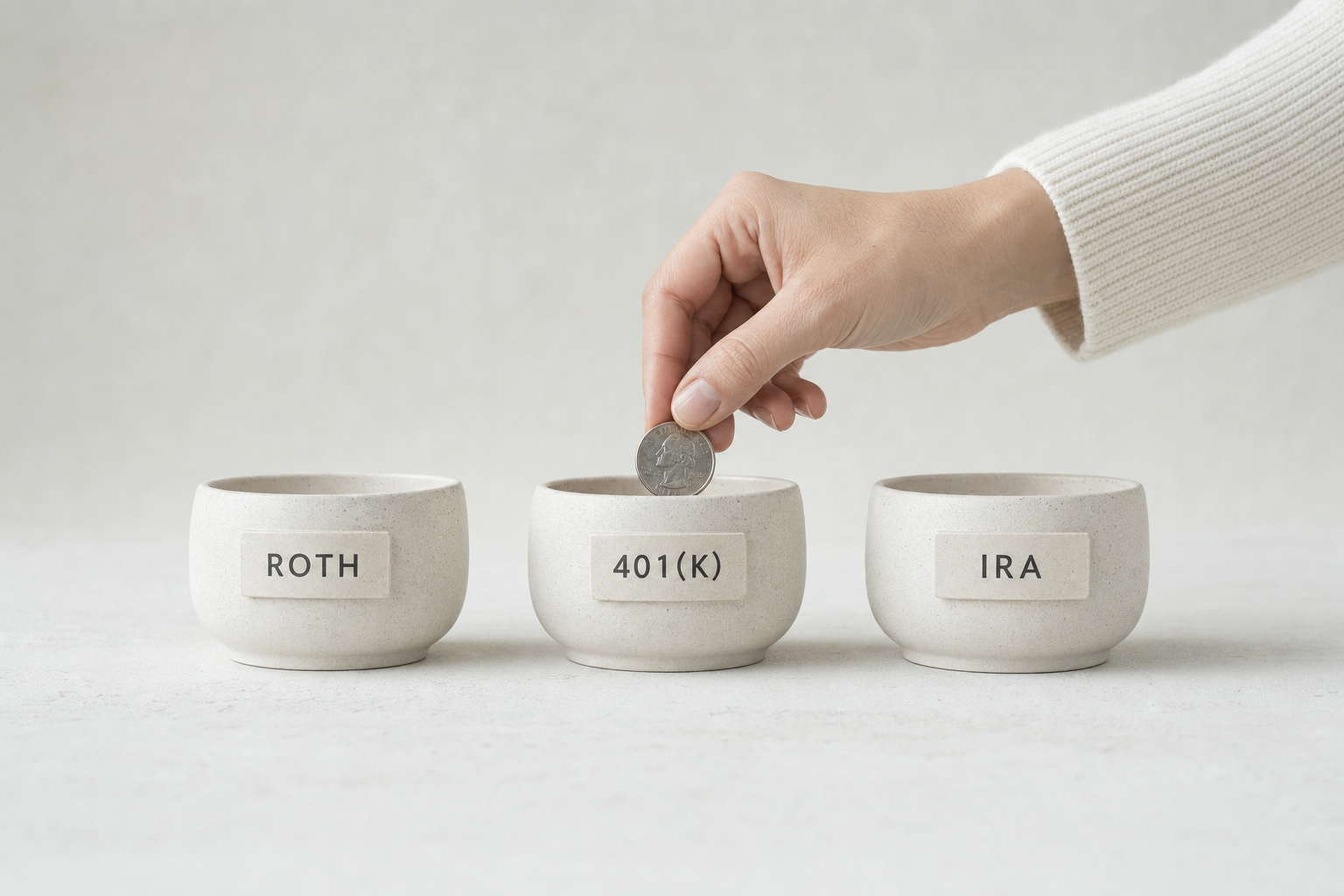
Roth, 401(k) or IRA First? The Order Matters More Than the Account
401(k) or IRA first: on an illustrative $70,000 salary the match plus the 22% bracket is worth $2,954 in year one, using…
-

Index Funds, Explained: What You’re Buying and What It Costs
Index fund expense ratio: sixty-four basis points a year surrenders 16.8% of a thirty-year balance against a 0.00% fund, at a 4.77%…
-

Which Debt First? Debt Avalanche vs Snowball, Priced in Dollars and Months
$424.52 separates the two orderings. Debt avalanche vs snowball on four illustrative balances, same 40 months, first account closed 17 months sooner.
-

S&P 500 Concentration Risk: What Diversified Really Means Now
S&P 500 concentration risk just hit a record high — here’s what that means if you assume your index fund is automatically…
-

Roth vs. Traditional IRA: The Break-Even Is a Tax Rate, Not an Age
Most people freeze up on this decision and end up putting money in neither account for another year. The core choice is…