In this piece
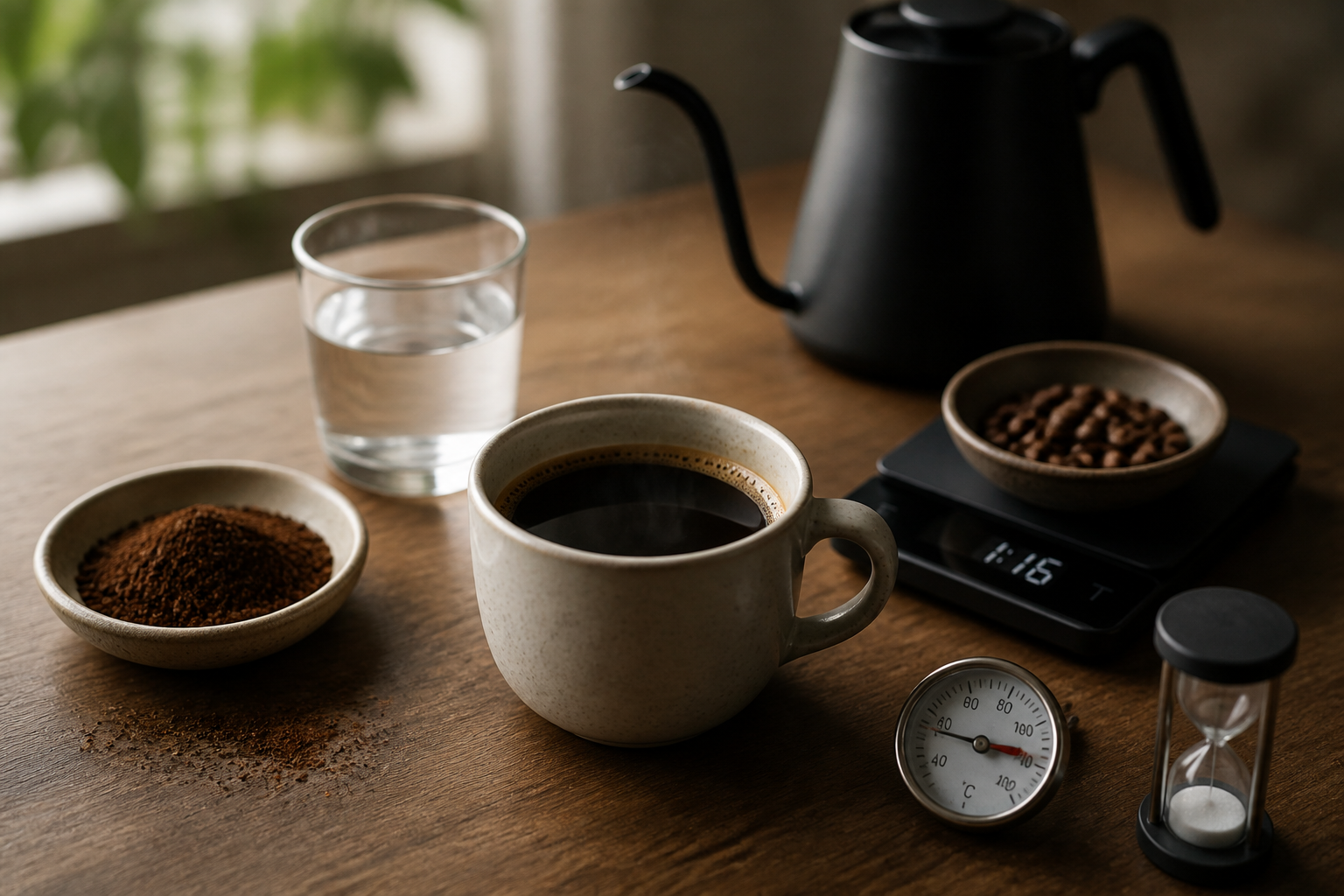
A bad cup is not a mystery. It is one variable sitting outside its range. The fault in the cup points at the culprit — if you changed only one thing.
Ratio and water get set once and then left alone
Brew ratio is the ballast. SCA Standard 310-2021 tests home brewers at 55 g of coffee per 1.000 kg of water. The standard is the SCA’s own. That copy is a public verbatim mirror; the association’s own public link to it returns a 404. Fifty-five grams per litre is a defensible place to stand. Pick it, weigh it, and stop moving it while you hunt the fault.
Ratio is the strength control. Turn it and more coffee dissolves into the same water. It does not change how hard the water worked on any single particle. That is a separate fault line from extraction. Confusing the two is the most common reason a fix does not hold.
Water is the other one you settle and then leave alone. It is not a dial you turn between cups. It still moves the cup further than a gram of coffee does. The full account sits in why your coffee tastes different at home than at the café. Sort it once, then treat it as fixed and stop blaming it.
What the drip standard pins down, and what it declines to
| Published target | Figure | SCA document | Year |
|---|---|---|---|
| Brew ratio for testing | 55 g coffee per 1.000 kg water | Standard 310-2021, Home Coffee Brewers | 2021 |
| Brew strength (TDS) | 1.15–1.55% at the standard ratio | Standard 310-2021, Home Coffee Brewers | 2021 |
| Slurry temperature | 90–96°C by the moment 33% of the water has been sprayed | Standard 310-2021, Home Coffee Brewers | 2021 |
| Extraction (solubles yield) | 18.0–22.0% | Minimum Certification Requirements for Coffee Brewers | 2017 |
| Water contact time | more than 4 minutes, less than 8 minutes | Minimum Certification Requirements for Coffee Brewers | 2017 |
| Water temperature at the grounds | 92°C within the first minute, never above 96°C | Minimum Certification Requirements for Coffee Brewers | 2017 |
Read the year column, not just the numbers. The 2021 standard defines percent extraction and then sets no numeric target for it, and no brew-time requirement at all. The 18.0–22.0% window everybody quotes comes from the older 2017 certification requirements, and so does the 4-to-8-minute contact time.
The two documents also disagree with each other. The 2017 requirements put the floor at 92°C, measured in the water at the point it meets the grounds. The 2021 standard asks for 90 to 96°C measured in the slurry itself, on three thermocouples in the bed. The floor reads two degrees lower, but the thermometer also moved, which is the point: these are committee specifications with a publication date and a test rig behind them, not physical constants.
Read the table as a specification for machines, not as a recipe. A brewer can hit every row and still produce a cup you dislike. The rows are useful as a sanity check on your kit. They are also a reminder that accepted numbers carry a publication date.
Grind is the fastest lever on the panel
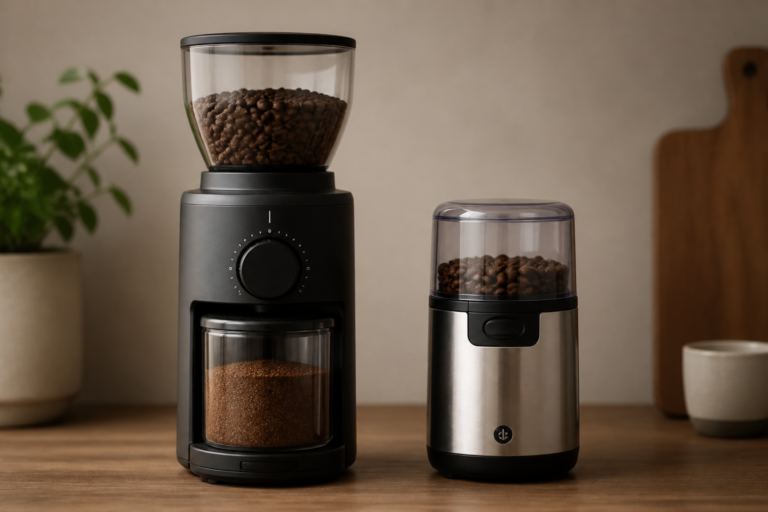
Grind size sets how much coffee surface the water can reach. That is why it moves extraction further per notch than anything else here. It is also the entire claim this piece needs from it. Grind size isn’t a setting makes the rest of the case, grinder included.
For diagnosis, treat grind as the first thing you move, and the only thing you move that brew. The reason is leverage. One notch on a burr grinder changes extraction more than a small nudge on the kettle does. It finds the fault in fewer brews. Temperature and time come after. They are the fine adjustment, once the coarse one is roughly right.
Sour and bitter send you to different variables
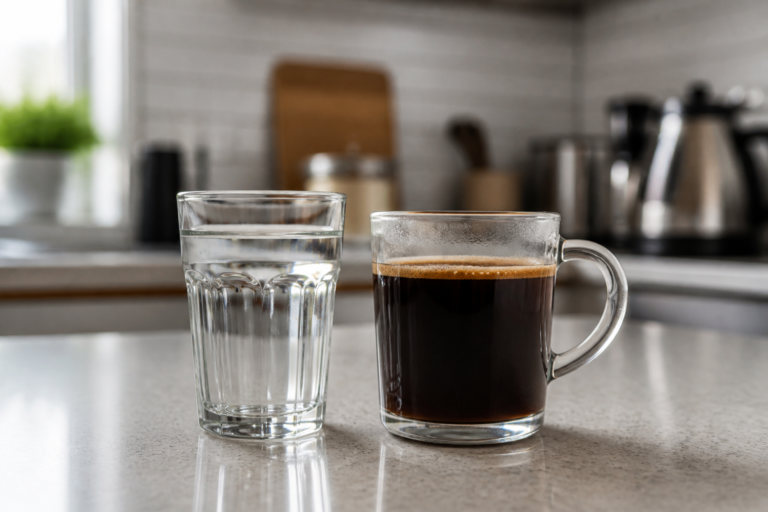
Thin, sharp and sour means the water did not pull enough out. Grind finer, or give it longer contact. Harsh, drying and hollow means it pulled too much. Grind coarser, or cut the time.
Weak but not sour is a third thing entirely. That is a ratio fault, not an extraction fault, and grinding finer will make it worse. Add coffee, keep everything else identical, brew again.
The discipline is boring and it is the whole job. One change, one brew, one note. Change two and the next cup cannot tell you which change did the work. Astringency is worth separating from plain bitterness. A drying finish and a plain bitter one do not always come from the same place, and the grind piece linked above works through that pair. Coarsen one notch, brew again, and read the difference. Write down the grind setting, the dose, the water weight and the time. Memory is a poor instrument, and a fault you fixed by accident will come back.
Temperature is where the published guides stop agreeing
AeroPress, the maker, says to heat water to 185°F (85°C). Stumptown, brewing on the same device, calls for 195–205°F (90–96°C). That is a gap of up to eleven degrees Celsius on one brewer. Both sources know the device well.
Time splits the same way. The maker waits 30 seconds on fresh-ground coffee and 60 seconds on pre-ground. Stumptown is still steeping at 1:15 and lands just under two minutes total. Time is not independent of the other two. Grind finer without shortening the brew and extraction climbs on both counts. That is why the two get separate brews.
Neither side is wrong. They are aiming at different cups with different coffee. Published targets are written for a test rig, or for one roaster’s beans. The cup in front of you outranks both.
The short version
One variable per brew is the entire method
Set the ratio, settle the water, then move grind, temperature and time one at a time. Sour and thin sends you finer or longer. Harsh and hollow sends you coarser or shorter. Flat and weak sends you back to the ratio, where a gram of coffee fixes what a grinder setting cannot.
Article sources
- Specialty Coffee Association, Standard 310-2021, Home Coffee Brewers: Specifications and Test Methods (public verbatim mirror)
- SCA, Minimum Certification Requirements for Coffee Brewers (2017 Certified Home Brewer program document)
- AeroPress, How to Use
- Stumptown Coffee Roasters, AeroPress Brew Guide