In this piece
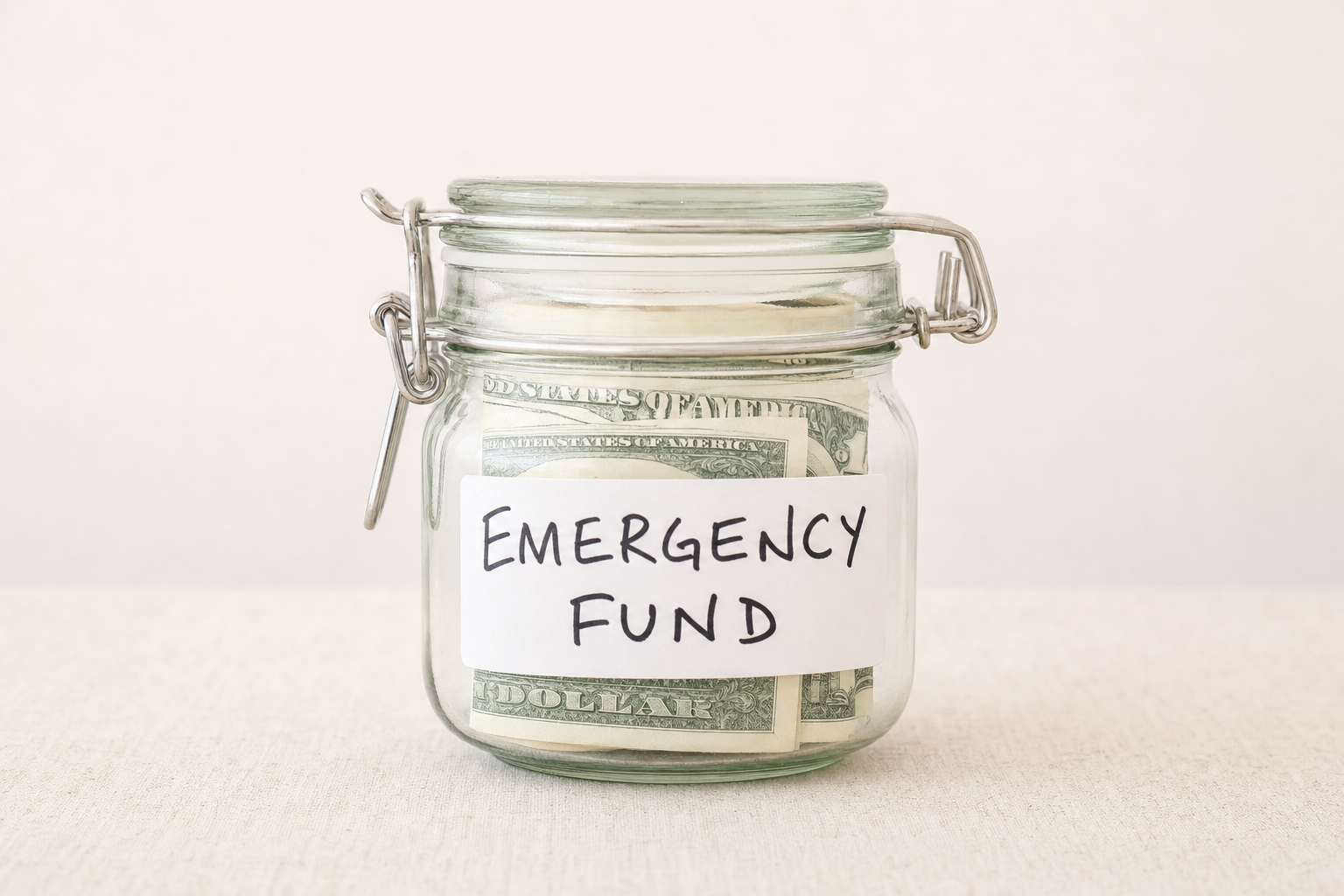
The car and the layoff need separate money. Two paychecks from unrelated employers, each earner under 45 and in a field where unemployment spells run near the median, can rest on three months of fixed costs, and a lone earner should hold six, in an insured account one transfer away from daily spending.
A car repair should come out of its own pot
The Federal Reserve asked adults about major unexpected expenses in its 2025 household survey, published in May 2026. Fifty-nine percent of adults had at least one major unexpected expense in the prior 12 months. Cars led. A major vehicle repair or replacement hit 30 percent of adults. Major house or appliance repairs followed at 22 percent, and unexpected major medical expenses at 21 percent.
A cost that common has no fixed date. The transmission goes. The money meant for a lost job pays for it. Then a household whose income never changed spends the rest of the year feeling behind. Sensible people do this because both costs live in one balance under one name.
Split them. Repairs get their own, smaller balance. Its size comes from what the car, the appliances and the insurance deductibles have cost over the last few years. When the car breaks, that balance pays. The reserve counted in months stays put for a lost paycheck.
Three months should carry two unrelated paychecks and six should carry one
The month to count follows a lost paycheck. It looks different from the month before. Rent or the mortgage keeps arriving. So do insurance premiums, utilities, loan minimums and child care, the fixed costs the reserve is counted in. Groceries and fuel can shrink once every receipt is watched. They enter the count at a leaner figure. A month of reserve then comes to less than a month of ordinary spending.
Time out of work sets the length. In its August 2026 jobs report, the Bureau of Labor Statistics reported that half of the people still unemployed in the survey week had been looking for more than 11.4 weeks so far, seasonally adjusted, a little over two and a half months. Their average was 26.3 weeks, about six months. Long spells pull it up. A full 27.0 percent had been looking for 27 weeks or longer. Sizing to the median spell so far feels prudent. With nothing else coming in, that reserve would already be spent for half the people in the count. The familiar three-to-six-month advice spans roughly the stretch between the median and the average.
Field and age move the figures. The bureau’s 2025 annual averages by industry sit on their own baseline, a median of 9.9 weeks for all the unemployed. They cover just eleven months. October’s survey was never collected during the government shutdown. Wage and salary workers whose last job was in construction showed 8.6 weeks. Leisure and hospitality showed 8.8. Information ran to 12.5 weeks, and financial activities to 12.9. Age matters too. The median runs from 6.8 weeks for teenagers to 11.8 for people aged 45 to 54, and stays above 10 from 55 on.
So the number follows the household. Two earners at unrelated employers, each under 45 and in a field near the 2025 median, can hold three months. The second paycheck is the first cushion. Unrelated employers make it less likely both stop at once. A lone earner should hold six. So should anyone in a field whose median spell runs well past the 2025 median, and anyone 45 or older. Commission and self-employment income belong at six too. Such income can fall for a whole quarter with no single event to mark the start.
Other resources shorten the count. In the same Fed survey, 55 percent of adults said they had set aside three months of expenses in an emergency or rainy-day fund. Another 15 percent of all adults said they could have covered three months by borrowing, selling assets or drawing on other savings. Borrowed months return as payments. They count for less than saved ones, because the new job has to repay them.
The money should sit one transfer away from daily spending
Where the reserve sits decides whether it survives. Checking is the easiest place to reach and the easiest to spend by accident. It also pays least. The FDIC’s national rate for interest checking was 0.07 percent in August 2026. Savings averaged 0.38 percent that month. Money market deposit accounts under $100,000 averaged 0.63 percent. Each rate averages what insured banks and credit unions pay, where data exist. It weights each one by its share of domestic deposits, so the biggest deposit-takers count most. “High-yield savings” loosely means a savings deposit priced well above that average.
Savings and money market deposit accounts are bank deposits. FDIC deposit insurance covers $250,000 per depositor, per FDIC-insured bank, for each account ownership category. At federally insured credit unions, the NCUA’s Share Insurance Fund covers individual accounts up to $250,000. A money market fund is a mutual fund. It holds short-term debt, cash and cash equivalents. The SEC’s investor education site warns of “a risk you may lose some or all of the money you invested.” FDIC insurance covers the deposit accounts alone. The Fed’s H.15 release supplies a yardstick. It put the three-month Treasury constant-maturity yield at 3.94 percent on September 8, 2026, a gauge of what short government debt paid that day.
The months need a little friction. An insured savings or money market deposit account paying near the top of the market holds them well. A second institution puts one transfer between the reserve and the debit card. That small delay protects it from the repair estimate, which has its own balance to draw on. For someone who keeps a brokerage account, a money market fund holding part of a six-month reserve adds a sale to that transfer and brings the risk the SEC describes.
The short version
The number of months belongs in the account’s name
A reserve labelled with its months, three or six, and a repair balance labelled with what it pays point each bill at the right money. The repair balance takes the transmission. The reserve stays whole for the months after a paycheck stops.
The job-search figures are national BLS estimates for people still unemployed when surveyed, and the deposit rates are monthly national averages; a household’s own severance, state unemployment benefits and account terms decide how many months it needs and what the reserve earns.
Article sources
- Federal Reserve, Economic Well-Being of U.S. Households in 2025 (SHED), Economic Hardships section, May 2026
- U.S. Bureau of Labor Statistics, Employment Situation Table A-12: Unemployed people by duration of unemployment (August 2026 data)
- U.S. Bureau of Labor Statistics, CPS annual averages 2025, Table 32: Unemployed people by occupation, industry, and duration of unemployment
- FDIC consumer page on deposit insurance coverage ($250,000 standard amount and covered account types)